Matt or Silk Emulsion? Choosing the Right Finish for Each Room
Not sure whether to use matt or silk emulsion? We explain which finish suits each room in East London homes, from Victorian terraces to rental flats.

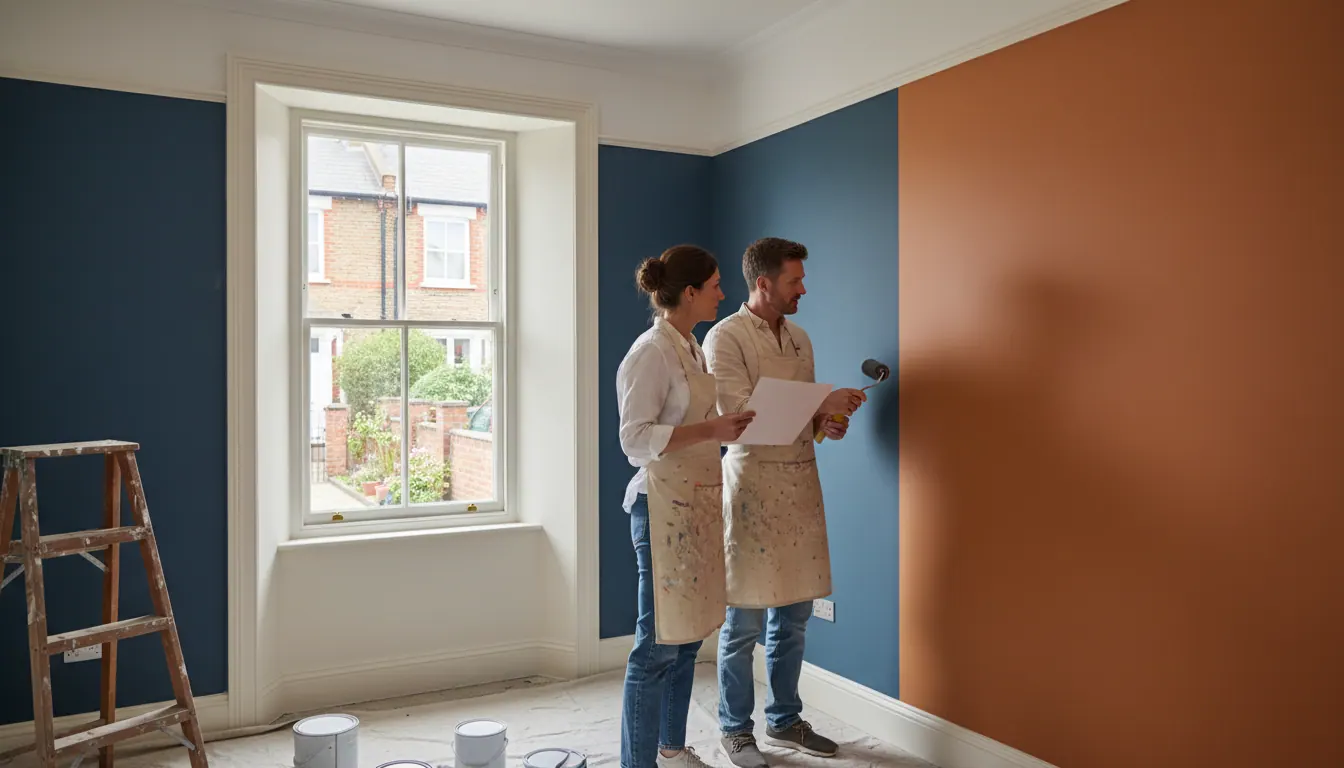
Matt or silk: why the finish matters more than the colour
Most people spend a long time picking a colour and about thirty seconds thinking about the finish. That is the wrong way round. The finish affects how a room looks in real light, how easy the surface is to clean and how long it holds up to daily life. In East London homes, particularly the Victorian and Edwardian terraces in E6 and E13, the 1930s houses in E12 and E7, and the purpose-built flats spread across Newham and beyond, the choice between matt and silk emulsion is worth getting right before the first pot is opened.
We paint walls, ceilings and interior woodwork across East London and surrounding areas every week. This is a straightforward guide to help you choose.
What is matt emulsion and where does it work best?
Matt emulsion has a flat, non-reflective finish. It absorbs light rather than bouncing it back, which makes it a popular choice for living rooms and bedrooms where you want a calm, even look on the walls.
It is forgiving on imperfect surfaces. Victorian and Edwardian plaster, which is common throughout East Ham, Stratford, Forest Gate and Plaistow, rarely gives you a perfectly flat wall. Matt emulsion sits on those slight undulations without drawing attention to them. Silk, by contrast, can highlight every bump and brush mark.
Where matt works well:
- Living rooms and bedrooms
- Ceilings (almost always matt)
- Older properties with textured or uneven plaster
- Rooms where the priority is appearance over scrubability
The trade-off is that matt emulsion marks more easily. Fingerprints, scuffs and light splashes can be harder to wipe off without leaving a shiny patch. Some modern matt formulas are more washable than older ones, but as a general rule matt is not the right choice for a wall that takes a lot of physical contact.
What is silk emulsion and where does it work best?
Silk emulsion has a gentle sheen. It reflects a small amount of light, which can make a darker room feel slightly brighter, and the surface is noticeably easier to wipe down. That is why it is often used in hallways, kitchens and children's rooms.
In East London rental properties, silk is popular for good reason. Landlords in Newham, Barking and Ilford know that walls in high-traffic areas need to cope with regular cleaning between tenancies. A silk-finished wall can be wiped with a damp cloth without losing its surface the way a standard matt can. If you are preparing a flat for letting or refreshing it between tenants, silk in the hallway and kitchen makes practical sense.
Where silk works well:
- Hallways and stairs
- Kitchens
- Children's rooms and family bathrooms (where a proper bathroom paint is not being used)
- Rental properties where walls need regular cleaning
- Rooms where you want a small lift of brightness
The trade-off is that silk shows surface imperfections more readily. On a wall with old filler patches or slightly uneven plaster, the sheen will catch the light and make those areas visible. Good preparation matters more with silk than with matt.
The finish question people forget: what about woodwork?
Walls and ceilings are one decision. Woodwork is another. Skirting boards, door frames, window frames and doors are generally painted with a harder-wearing finish than emulsion, because they take more knocks and need to be wiped down regularly.
Traditionally, gloss was the standard for woodwork. It is durable and easy to clean. These days, many people prefer a satin or eggshell finish, which gives a softer look than full gloss while still being tough enough for door frames and skirting boards. Matt woodwork paint exists but it is rarely the right choice for skirting boards, which sit low and take knocks from feet, furniture and vacuum cleaners.
So to answer the question directly: skirting boards are almost never matt. Gloss or satin is the practical choice, and which one you pick usually comes down to whether you want a traditional high-shine look or something a little softer.
We paint interior woodwork across East London, and we are happy to talk through which finish suits the rest of your room before we start.
Matching the finish to the room: a practical room-by-room guide
Living room: Matt on walls and ceiling. Satin or gloss on skirting and door frames. The flat finish looks clean and works with almost any colour.
Bedroom: Matt walls and ceiling. The same satin or gloss on woodwork. Matt keeps bedrooms feeling restful.
Hallway and stairs: Silk or a durable matt on walls. Satin or gloss on woodwork. Hallways take more traffic than any other part of the home, and the walls need to be wipeable.
Kitchen: Silk or a specialist kitchen paint on walls. Gloss or satin on woodwork and units. Steam, grease and splashes mean you need a surface you can clean properly.
Bathroom: Use a specific bathroom emulsion rather than standard silk. Bathrooms need a paint formulated to resist moisture and inhibit mould. The finish question is secondary to using the right product.
Ceilings throughout: Ceiling white or a pale matt emulsion. Ceilings are almost always matt. A silk ceiling catches the light awkwardly and draws the eye upward in a way most people find unsettling.
A word on older East London properties
If you live in a Victorian terrace in E6 or E13, a 1930s semi in E12, or an older flat in Stratford or Forest Gate, there are a couple of things worth knowing before any painting work starts.
Paint applied before the 1960s may contain lead and should not be dry-sanded. If you are unsure about the age of existing coatings, do not sand them down without taking advice first.
Textured coatings such as Artex applied before the year 2000 may contain asbestos. Do not sand or scrape them without getting professional guidance first.
Mould and damp are a separate issue. If you have mould on a wall, the cause needs to be identified and fixed before any repainting takes place. Painting over mould is not a fix. It will come back through the new paint. Sort the source of the moisture first, then repaint once the wall is dry and treated.
We are painters and decorators, not damp specialists or asbestos surveyors. We will always flag anything that looks like it needs attention before we start, but those issues need to be dealt with by the right people first.
What one of our customers said
Very good service, did exactly what we wanted. Very Happy.
That is from Pups, one of our Google reviewers. It is a simple comment, but it reflects something we take seriously: doing what was agreed, to the standard expected, without fuss. Choosing the right finish is part of that. When we quote a job, we talk through the finish options so there are no surprises when the paint goes on.
Practical tips before you decide
- Test in the actual room. Paint a small section of wall with your chosen colour in both matt and silk. Look at it in the morning light, in the evening with lights on and in natural daylight. The sheen of silk can look very different depending on the light source.
- Think about who uses the room. A family kitchen in Plaistow or a busy hallway in a rented flat in Barking needs a more durable finish than a quiet spare bedroom.
- Prepare the surface properly. Whatever finish you choose, the result is only as good as the surface underneath. Fill, sand and prime before you paint, especially if you are going from matt to silk.
- Ventilate the room. While painting and while the paint dries, keep windows open where possible. Drying and recoat times vary depending on the product, temperature and humidity, so follow the manufacturer's guidance rather than guessing.
If you are preparing a rental property between tenancies, our article on Painting a Rental Flat Between Tenancies in East London covers the practical side in more detail. And if you are living in the property while the work is being done, Painting While You Live There: How to Keep Mess Out of Your Home is worth a read before we start.
Frequently asked questions
Which paint is more washable, matt or silk? Silk is easier to wipe down. The slight sheen means the surface is less porous and resists light marks and moisture better than standard matt. Modern durable matt formulas have improved, but for walls that get regular contact, silk is still the more practical choice.
What finish do professional decorators usually use on walls? It depends on the room and the client's preference. In our experience across East London homes, matt emulsion is most common on living room and bedroom walls, silk is popular in hallways and kitchens, and ceilings are almost always matt. There is no single answer because the right finish depends on the room.
Should skirting boards be gloss or matt? Gloss or satin almost always. Skirting boards take knocks and need to be wiped down. Matt woodwork paint does not hold up as well in those conditions. Satin gives a softer look than full gloss while still being durable.
What finish do most people choose for their walls? Matt is the most widely used finish for living rooms and bedrooms. It gives a clean, flat look and is forgiving on slightly uneven plaster, which matters in a lot of older East London properties.
Get a free quote for your East London home
If you are ready to refresh a room or a whole flat, we are here to help. We work across East London and surrounding areas, including E6, E7, E12, E13, E15, IG11, Stratford, Plaistow, Forest Gate and beyond. We quote each job individually once we understand what is needed, so you get an accurate figure rather than a guess.
Get in touch to arrange a free quote, or call us on 07376 301363 or email marianrenovation28@yahoo.com. We are straightforward to deal with and happy to talk through finish options before you commit to anything.