Painting a Victorian Terrace in East Ham: Finishes That Work
Planning interior painting in a Victorian terrace in East Ham or East London? We cover finishes, prep and what to expect. Free quotes from Marian Renovation Ltd.

Why Victorian terraces in East Ham need a different approach to painting
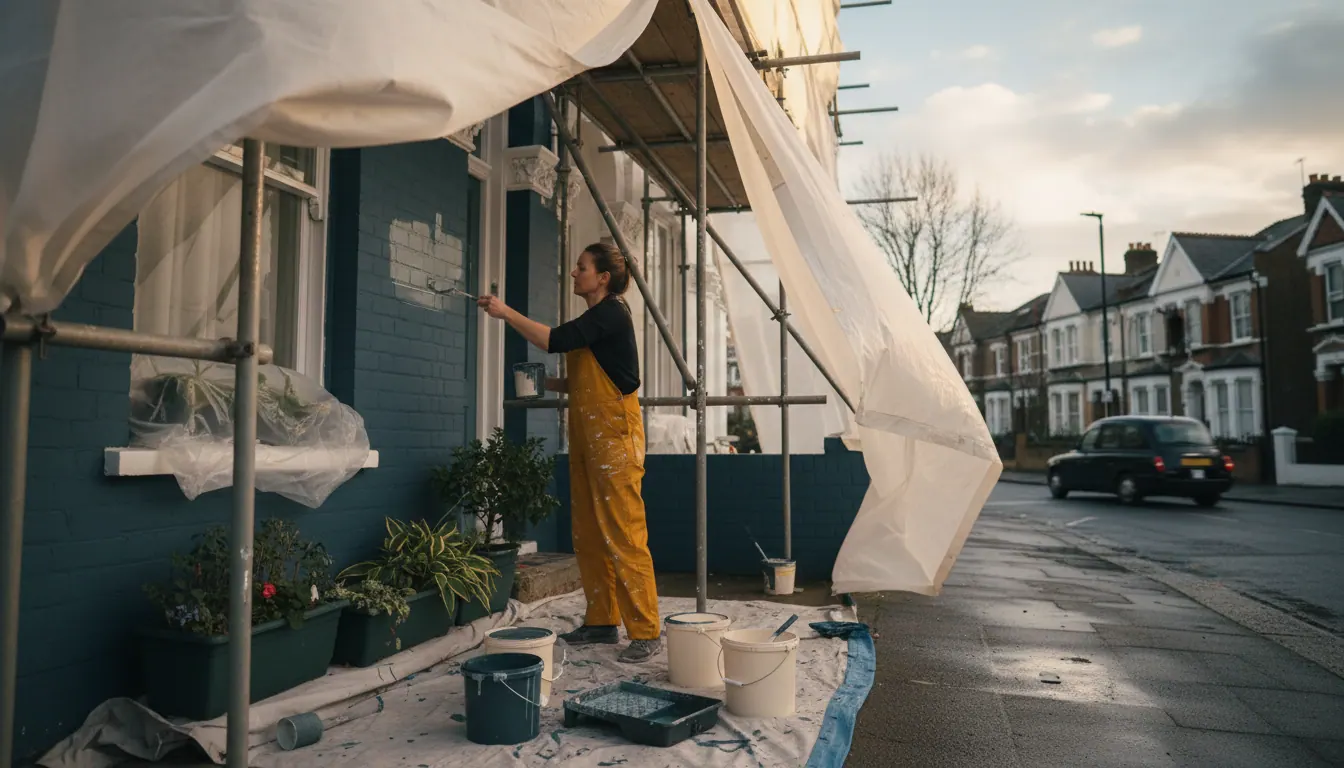
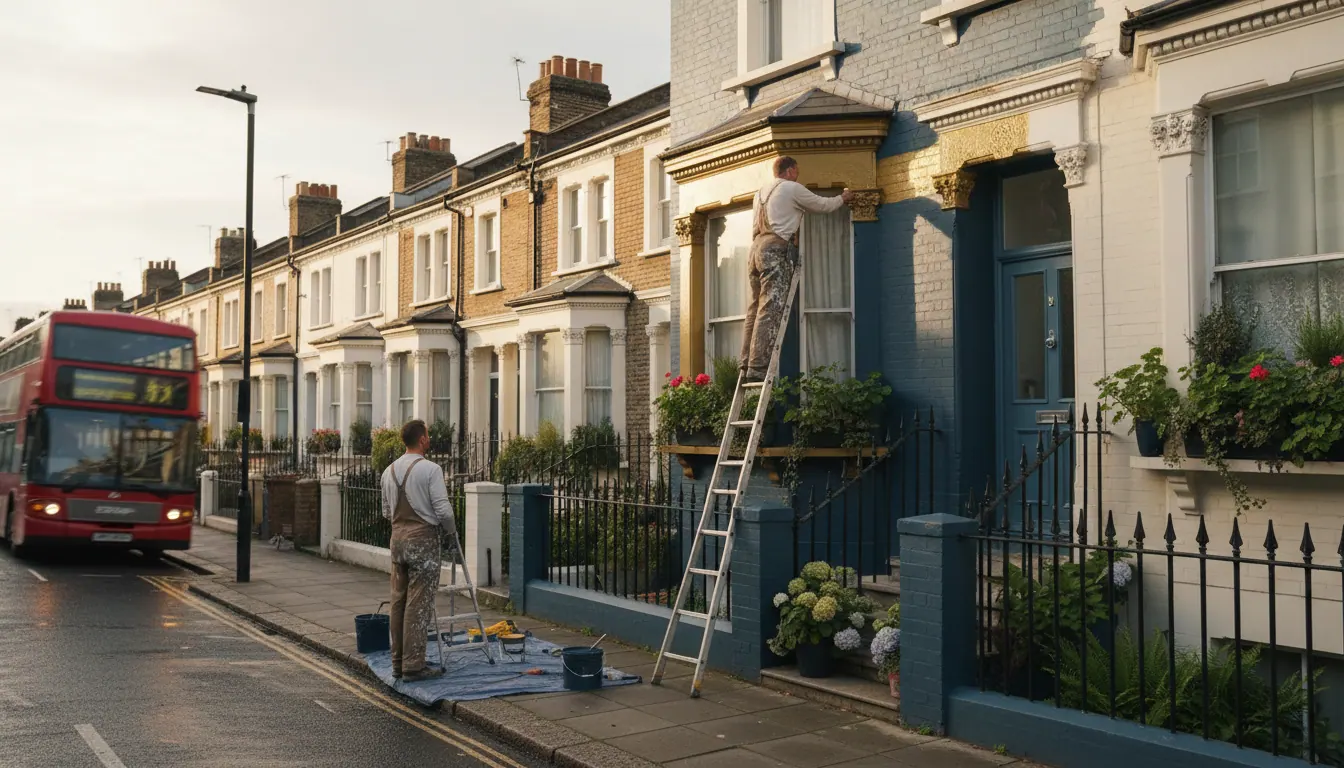
Victorian terraces are all over East Ham, Plaistow and Forest Gate. Walk down almost any residential street in E6, E13 or E7 and you will find rows of two-up two-down houses with high ceilings, narrow hallways, bay windows and rooms that have been divided, extended and replastered over the decades.
That history shows in the walls. Older properties carry layers of old emulsion and surfaces that are rarely as flat as those in a modern new-build. The rooms are often smaller than they look from outside, and the tall, narrow proportions mean that light and colour behave differently than in a 1930s semi or a purpose-built flat.
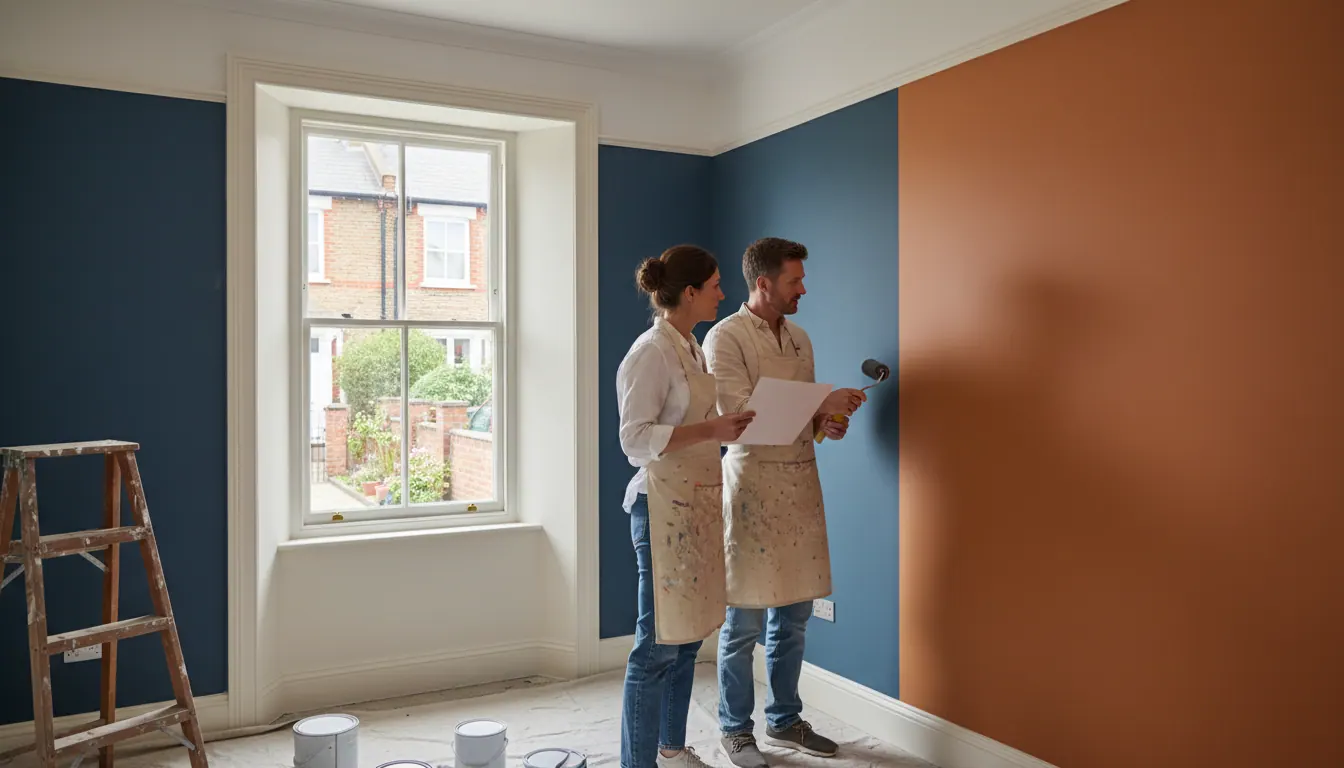
Marian Renovation LTD specialise in interior painting for homes across East London, in matt and silk emulsion. This guide covers what tends to work for interior painting in period properties. See our interior painting page.
Preparation is where terrace painting is won or lost
Before a brush touches a wall, the preparation has to be right. In older East Ham terraces, that often means dealing with:
- Hairline cracks in plaster, especially around cornices, ceiling roses and window frames where the building has settled
- Uneven surfaces from previous repairs, patched plaster or old textured coatings
- Flaking or chalky old emulsion that will not hold a new coat without being stabilised first
- Mould in bathrooms, kitchens or north-facing rooms where ventilation is limited
On the last point: mould must have its cause identified and fixed before repainting. That usually means looking at ventilation, condensation or a leak. Painting over mould is not a fix, because it will come back through the new coat if the underlying problem has not been addressed.
If you are stripping back old paintwork in a Victorian property, paint applied before the 1960s may contain lead and should not be dry-sanded. Textured coatings such as Artex applied before the year 2000 may contain asbestos and must be identified before being sanded or scraped. If there is any doubt, speak to a qualified professional first. Good preparation is what makes a finish last.
Choosing the right paint finish for period rooms
High ceilings and cornicing often look best in a flat, chalky finish. Matt emulsion absorbs light rather than reflecting it, which suits the proportions of many Victorian rooms and hides minor surface imperfections better than a sheen finish would.
Silk emulsion has its place. Hallways and kitchens, in particular, benefit from a silk finish because it is easier to wipe down. But in a living room or bedroom with original or restored cornicing, matt tends to look more considered.
For woodwork, such as skirting boards, door frames, window sills and picture rails, a hard-wearing interior paint gives a clean, defined line. Original Victorian woodwork, when it is intact, is one of the best features of these houses, and a tidy finish on the woodwork makes the whole room look sharper. See our woodwork painting page.
A few things to keep in mind:
- Drying and recoat times vary depending on the product, the temperature and the humidity. Always follow the manufacturer's guidance. In winter, rooms can take longer to dry than the tin suggests.
- Rooms should be ventilated while painting and while the paint is drying.
- The number of coats needed depends on the surface and any colour change, so judge it room by room.
Colours that work in terraced houses
North-facing rooms are common in terraced houses. They get limited direct light, and the wrong colour can make them feel cold and flat for most of the day. Warm whites and off-whites, soft greens and muted clay tones tend to work well in these rooms because they reflect what light there is without feeling stark. Bright, cool whites can look clinical in a low-light room.
For hallways, which are typically narrow and tall in a Victorian terrace, a slightly deeper tone on the walls with a crisp white ceiling and woodwork can add depth rather than making the space feel like a corridor.
If you are repainting a rental property, a consistent neutral palette across the whole flat helps the space feel larger. Newham is a busy rental borough, and the council runs a landlord licensing scheme, so keeping a property in good decorative order is part of managing a compliant rental. See our painting for landlords page, and our article on painting a rental flat between tenancies in East London.
What to expect when your terrace is painted
Our interior painting is clean, fast and dust-free, which suits occupied homes as well as empty properties between tenancies. For occupied homes, that means protecting furniture and flooring, working room by room where possible and keeping dust and disruption to a minimum. See our guide to painting while you live there.
Our own estimate for a 1 to 2 bed flat is a turnaround of 1 to 2 days, and larger properties or rooms needing more preparation will take longer. We are rated 5.0 on Google from 3 reviews, and customers mention great attention to detail, a clean result and reliable communication. Read more about us.
We cover E6, E7, E13, E12, IG11, E15, Stratford, Plaistow, Forest Gate and surrounding East London areas.
Frequently asked questions
What are the most common painting mistakes in Victorian terraces?
Skipping preparation is the biggest one. Old plaster in period properties is often uneven, and flaking or chalky surfaces will not hold a new coat without proper cleaning and priming first. Choosing too shiny a finish for a high-ceilinged room, and painting over mould without fixing the cause, are also common.
Can I paint the interior of my Victorian terrace any colour I want?
For the interior, generally yes. If you are a tenant rather than an owner, check your tenancy agreement first, as some landlords require the property to be returned in its original colour. For landlords, check current tenancy obligations and fair wear and tear guidance before redecorating between tenants.
How many coats of paint does a Victorian terrace wall usually need?
It depends on the surface and any colour change. Porous plaster, a strong existing colour or a very dark colour being painted over may need more coats than a straightforward refresh.
How do I know if the old paint in my Victorian home contains lead?
Paint applied before the 1960s may contain lead. If your property has layers of old paint and you are unsure of its age, do not dry-sand it, and speak to a professional before disturbing the surface.
Get a free quote for your East Ham terrace
If you have a Victorian terrace, an Edwardian house or a period flat in East London and you want interior painting done properly, we give free quotes. Call us on 07376 301363, email marianrenovation28@yahoo.com or use our contact form.
“Really happy with the room painting—great attention to detail and a clean, professional finish. The contractor was reliable, easy to communicate with, and completed the job on time. Would definitely recommend!”